
Why competence alone is not enough – will and emotions drive organizational success
A sense of meaning, understanding others, and mutual trust are key drivers of success—both for leadership teams and entire organizations. Janne Marttinen, Senior Consultant and Executive Coach at Arespartners, supports companies in building stronger organizations. In leadership development and executive recruitment, he leverages scientifically validated emotional and personality assessment tools.
What truly motivates people to do their best at work—beyond compensation?
“Traditionally, performance is seen as the result of an individual’s input. That input, in turn, is thought to depend on competence and motivation,” says Janne Marttinen.
But how do we define and measure motivation consistently? What do people really want from their work beyond salary or bonuses? And how can leaders influence this “will” dimension?
For Marttinen, who has worked extensively as an executive coach, these questions long lacked clear, universal answers.
A sense of meaning drives contribution
In his role at Arespartners, Marttinen coaches leadership teams and executive groups, and regularly uses the WorkPlace Big Five Profile® personality assessment, the EQ-i 2.0® emotional intelligence assessment, and occasionally the EECA® Emergy Emotional Climate Audit.
Through these tools, he has found answers to his earlier questions: the willingness to contribute is strongly influenced by positive emotions and a sense of meaning—both of which can be fostered through effective leadership. These factors are reflected in higher engagement, well-being, and ultimately stronger business results.
“These tools provide a compelling answer to why people work for more than just money. The emotions individuals experience in relation to their work and their workplace significantly influence how much effort they are willing to invest,” Marttinen explains.
Emotions play a key role in leadership development
An employee who experiences frustration, irritation, or a lack of appreciation is unlikely to give their full contribution.
In contrast, someone who feels inspired or proud of their work and organization is far more willing to invest their full potential.
“Emotional assessment tools reveal underlying dynamics that might otherwise go unnoticed. They help us understand why frustration exists, why collaboration may not be working, or where tension originates,” Marttinen says.
Leadership development should therefore be tailored to the emotional reality of the organization.
“For example, fear, perceived unfairness, and frustration each require a different leadership approach,” he adds.
Understanding builds trust—and results
Emotional skills within leadership teams are critical for overall organizational success.
“Leadership teams need to believe that by understanding each other—their drivers, behaviors, and ways of working—and by collaborating closely, they can significantly improve business outcomes. Emotionally intelligent leadership is reflected throughout the organization,” Marttinen notes.
In his coaching, he often uses assessment tools to strengthen mutual understanding and trust within leadership teams.
The process typically begins with individual debriefs, where each leader reviews their personal results.
This often leads to greater openness within the team, as individuals become more willing to share their working styles and personality traits.
“Emotional awareness within a leadership team improves collaboration and creates the foundation for trust. For example, when someone says, ‘When I’m excited, I tend to speak a lot—but I don’t intend to override others,’ it helps colleagues interpret their behavior more accurately. This builds understanding—and through that, trust,” Marttinen explains.
As trust strengthens, so does organizational resilience—the ability to navigate change and uncertainty.
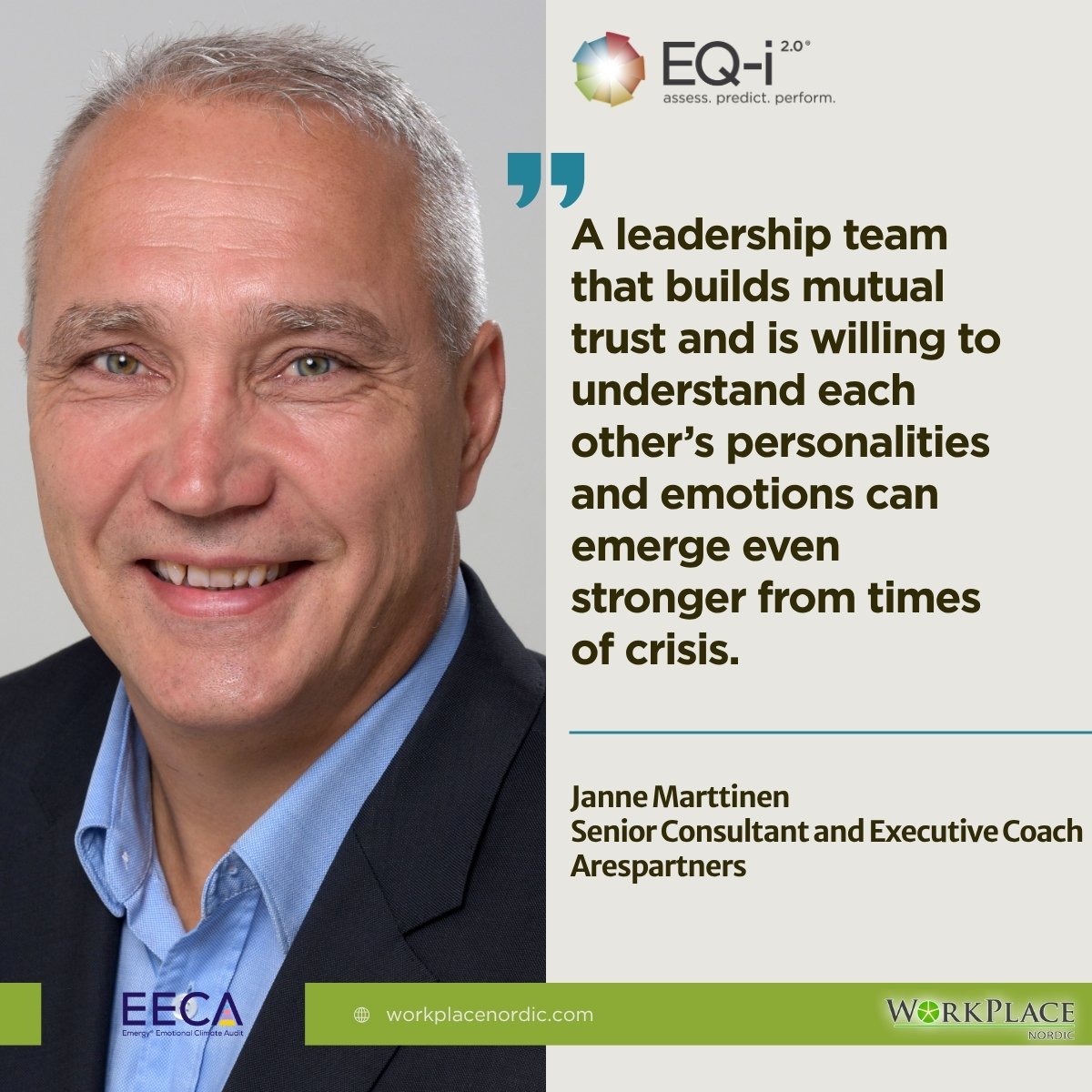
“A leadership team that understands each other and works cohesively is far better equipped to handle challenging situations than one lacking trust.”
The business impact of emotional assessment tools
EECA® Emergy Emotional Climate Audit supports team collaboration, organizational culture development, and employee well-being.
EQ-i 2.0® emotional intelligence assessment is widely used in leadership development, team effectiveness, and recruitment processes.
WorkPlace Big Five Profile® personality assessment provides valuable insights for leadership development, team performance, and talent selection.
———
Janne Marttinen is an experienced business developer with a strong focus on leadership, interpersonal dynamics, and the development of emotional skills.